
Ayurvedic Treatment for Mouth Cancer
Ayurvedic treatment for mouth cancer in India. Oral healing herbs and immune-boosting care at Dr. Shinde's Cancer Clinic, Indore. At Dr. Shinde's Ayurvedic Cancer Care Clinic, we provide holistic Ayurvedic supportive treatment tailored to each patient's unique body constitution (Prakriti) and stage of illness.
📞 First Consultation is FREE. Call or WhatsApp Dr. Shinde at +91-8889188821 to book your appointment today.
Our Ayurvedic Treatment Protocol for Mouth Cancer
- Shodhana — Detoxification: Panchakarma therapy to cleanse toxins and purify the body
- Rasayana — Rejuvenation: Immunity-boosting and strength-restoring herbal formulations
- Shamana — Pacification: Personalized herbs to balance Vata, Pitta and Kapha doshas
- Ahara — Dietary Guidance: Customized diet plan based on Prakriti analysis
- Yoga & Pranayama: Breathing exercises and yoga for overall wellness and mental strength
- Meditation & Counseling: Emotional and spiritual support throughout the recovery journey
Key Benefits of Ayurvedic Supportive Care
- ✔️ Significantly reduces side effects of chemotherapy and radiation
- ✔️ Improves immunity, energy and overall body strength
- ✔️ Enhances quality of life during and after treatment
- ✔️ Supports long-term wellness, recovery and prevention of recurrence
- ✔️ Natural, plant-based formulations, well-tolerated by most patients
- ✔️ Can be safely used alongside modern cancer treatment (with doctor approval)
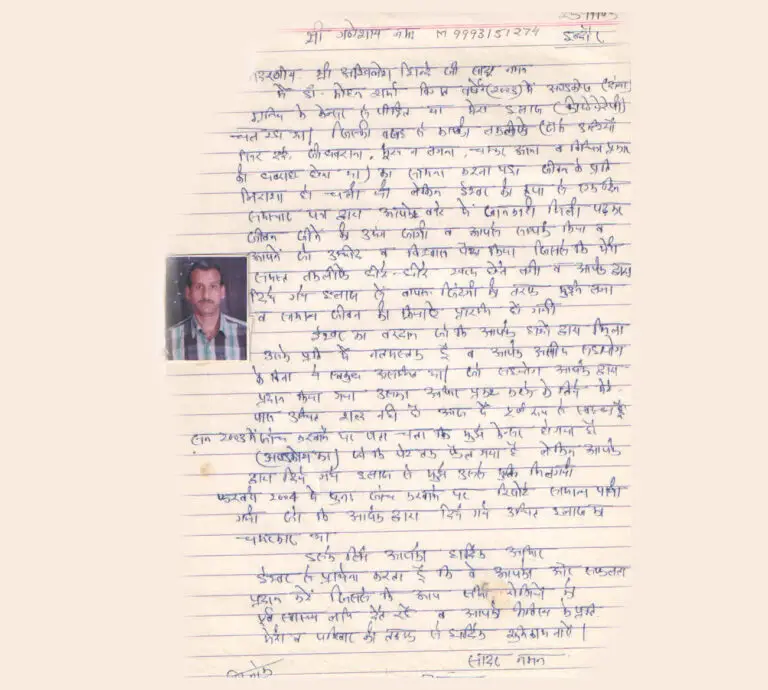
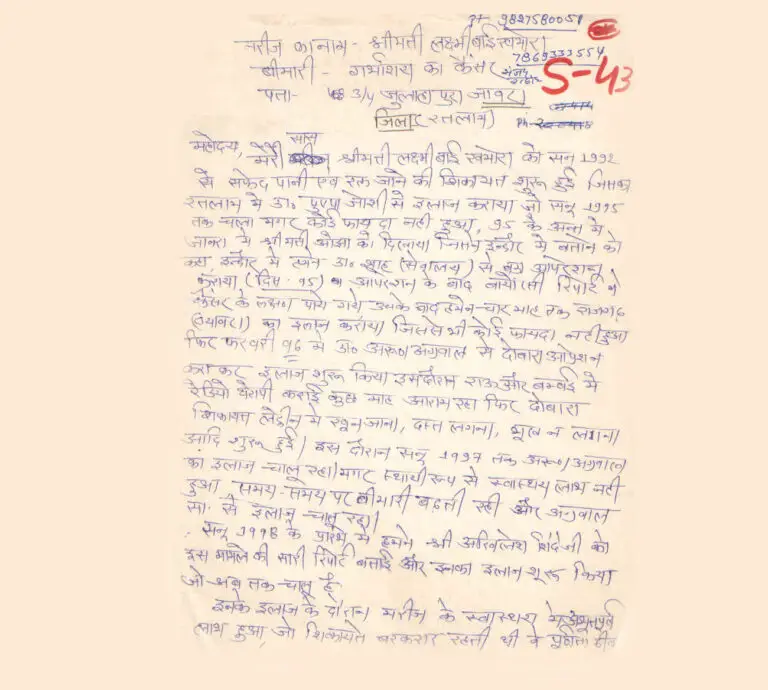
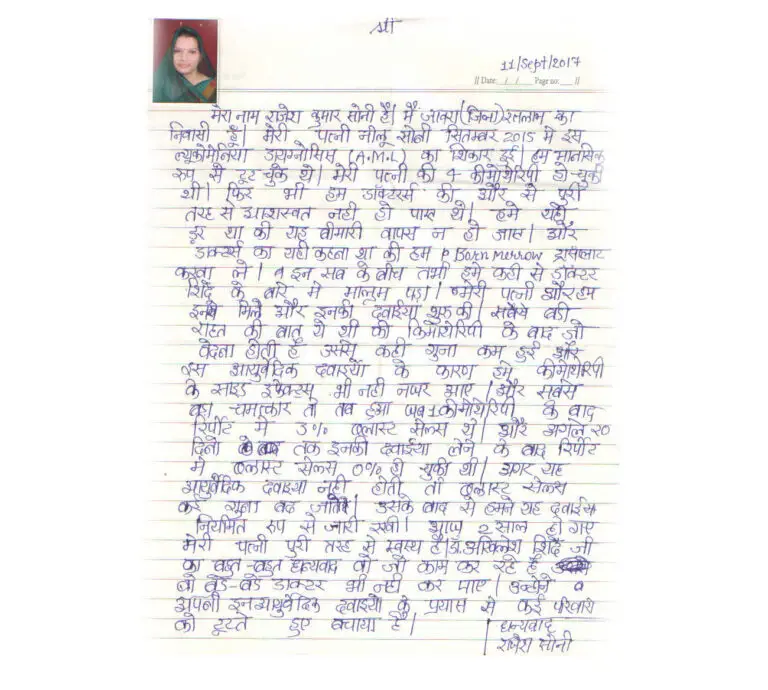
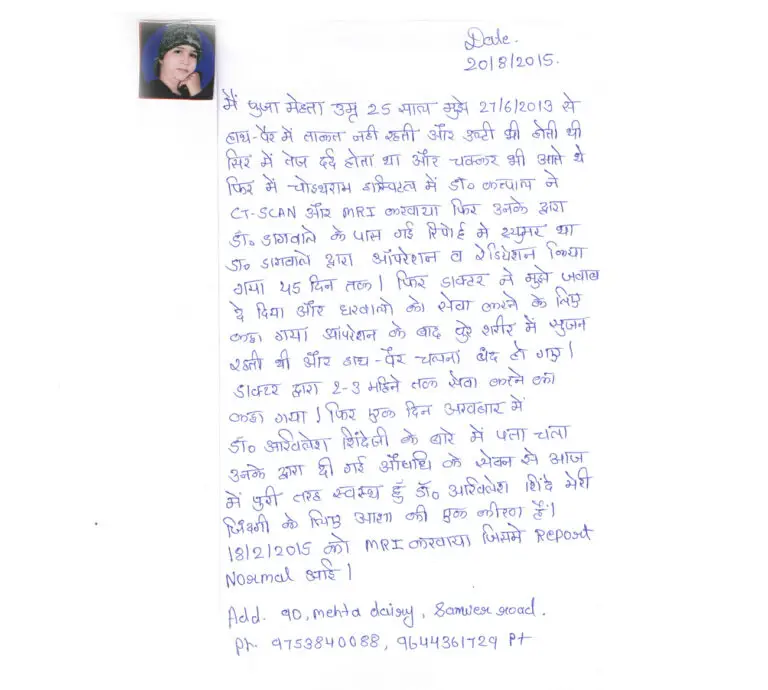
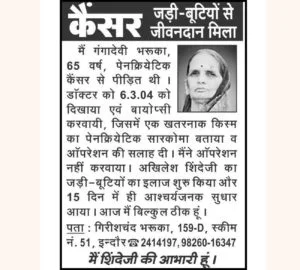
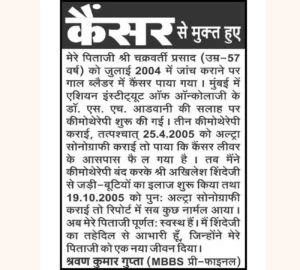
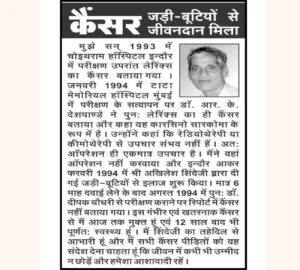
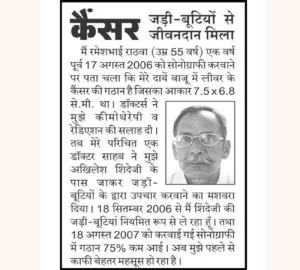
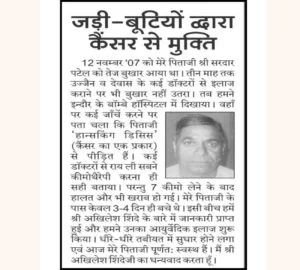
Patient Success Stories
How Ayurveda Understands Mouth Cancer
Ayurveda's mukha roga chapters describe diseases of the oral cavity in remarkable detail, including stubborn growths and non-healing ulcers of cheek, tongue and gums. In our framing, mouth cancer is a pitta–kapha corruption of the oral tissues on chemically burned ground — decades of gutkha, mawa, kharra, khaini, paan-supari and tobacco literally cooking the buccal mucosa until leukoplakia (white patches), submucous fibrosis (tightening) and finally arbuda develop. India carries the world's largest oral-cancer burden for exactly this reason, and our clinic — sitting in the gutkha heartland — has made this cancer a four-decade specialisation: lesion-stage herbs, radiation support, eating rehabilitation and the de-addiction work without which nothing holds.
From White Patch to Recovery: Support at Every Stage
Pre-cancerous stages (leukoplakia, erythroplakia, oral submucous fibrosis): our highest-value window — mucosa-healing herbs, medicated-oil gandusha (oil-holding therapy), trismus-easing protocols for tightening mouths, and absolute tobacco cessation; many lesions stabilise or regress with discipline, always under biopsy surveillance. Around surgery: pre-operative strengthening; post-operative healing support, graft-site care guidance and the patient rebuilding of speech-and-swallow confidence with the hospital's therapists. Through radiation: the defining battle — mucositis (mouth burns), xerostomia (dry mouth), taste loss and thick secretions each receive specific classical answers that keep patients eating through the course. Advanced disease: pain layered with hospital analgesia, nutrition through modified textures, oral comfort care and family coaching. Survivorship: years of dry-mouth management, dental vigilance and unwavering tobacco abstinence.
Herbs and Classical Formulations We Commonly Use
Mouth-cancer support draws on Ayurveda's strong topical-plus-internal toolkit: Yashtimadhu (Glycyrrhiza glabra) — the premier mucosa-soothing herb, as ghee preparations and gandusha; Triphala decoction gargles — classical, gentle oral antisepsis through radiation; Haridra (Curcuma longa) — the most researched herb in oral pre-cancer tradition, used internally and topically; Khadira (Acacia catechu) — the time-honoured mukha roga herb; Jatyadi and Yashtimadhu ghrita/taila — healing applications for ulcerated tissue; Guduchi and Ashwagandha internally for immunity and strength; and saliva-supportive sips and preparations for radiation dry-mouth. Every topical is matched to lesion stage and hospital treatment timing — radiation weeks have their own strict do's and don'ts.
Eating, Speaking and Quitting: The Three Rehabilitations
Mouth cancer attacks identity — food, speech, face — so rehabilitation is our core craft. Eating: texture-modified nutrition that still tastes like food — soft khichdi variants, dal mashes, paneer-bhurji softness, smoothie-style preparations with almond and date, served lukewarm (never hot) during radiation; straw techniques and posture tricks for painful phases; weight tracked weekly because every kilo held is treatment tolerance preserved. Speaking and mouth-opening: trismus responds to disciplined, gentle jaw-stretch routines we teach alongside the hospital's physiotherapy, supported by warm-oil external application; speech returns with practice schedules and patience the family must share. Quitting: the non-negotiable — gutkha or kharra continued is treatment reversed; our protocol pairs gradual nicotine tapering with craving-blunting herbs, replacement oral habits (saunf-elaichi formats), weekly WhatsApp accountability and family enforcement coaching. Three rehabilitations, one goal: a person who eats, speaks and lives tobacco-free.
Diet for Mouth Cancer Patients
The mouth-cancer kitchen obeys one law — nothing that burns, scrapes or dries — and inside it builds full nutrition: lukewarm soft khichdi with ghee; dal-rice mashes; bottle-gourd and pumpkin purées; ripe banana, stewed apple, chikoo; soft paneer and well-set custard-style preparations; almond-date pastes for calories; buttermilk at room temperature. Banned through treatment: chillies and hot spices, very hot food and beverages, hard-crisp-sharp textures (papad, toast edges, dry namkeen), citrus and raw tomato on ulcerated tissue, alcohol-based mouthwashes, and — permanently — every form of tobacco, areca and paan. Radiation weeks add frequent small sips, pre-meal soothing ghee, and post-meal gentle Triphala rinses. The diary rule applies: what hurt today gets reformatted tomorrow, until eating is safe pleasure again.
Questions Families Ask Us About Mouth Cancer
I have a white patch inside my cheek and I chew gutkha. Is it cancer?
A persistent white patch is a warning that demands biopsy this week — many are pre-cancerous, not yet cancer, and that difference is your opportunity. Whatever the report, the gutkha stops now; our lesion-stage protocol plus cessation gives you the best odds of never needing this page again.
Radiation has burned my father's mouth so badly he refuses food. Help?
This is mucositis, our most-treated radiation problem: lukewarm ghee-yashtimadhu preparations, Triphala rinses, texture-modified calorie-dense menus and pain-timed eating windows. Most patients keep eating through the course with this support.
His mouth barely opens two fingers now. Is that permanent?
Submucous fibrosis and post-treatment trismus improve with disciplined daily stretch protocols, warm-oil application and time — gains are real but earned in millimetres over months. We coach the routine and track it.
He's quit gutkha ten times and failed. Why would now differ?
Because willpower alone was never a protocol. Tapering plus craving-blunting herbs plus replacement habits plus weekly accountability is a system — and a cancer diagnosis, hard as it is, is the strongest motivation he will ever have. We use it.
Medical note: Ayurvedic care at our clinic is supportive and integrative. It works alongside — never in place of — the surgery, chemotherapy, radiation or targeted therapy your oncologist prescribes. Always keep your treating doctors informed of every medicine you take.
Learn more about our Ayurvedic cancer clinic in India, explore last-stage cancer support, or see all 28+ cancer types we treat.
Warning Signs in the Mirror: A Self-Check Every Tobacco User Owes Themselves
Mouth cancer is India's most visible cancer — literally visible, in a mirror, months before it turns dangerous — and every gutkha, kharra, khaini or paan user should check monthly: a white or red patch anywhere inside the mouth; an ulcer or sore that hasn't healed in three weeks; a lump, thickening or rough area on cheek, tongue or gums; difficulty or pain in chewing, swallowing or moving the tongue; gradually reducing mouth opening (two fingers where three fit before); numb patches; loose teeth without dental cause; or persistent throat discomfort and voice change. Any one of these earns a biopsy-capable doctor's visit this week. The brutal arithmetic of oral cancer is also its mercy: caught at the patch stage, outcomes are excellent; caught late, every option narrows. Check monthly, act fast, and stop the tobacco — the mirror is the cheapest screening programme in medicine.
Why Mouth Cancer Patients Across India Choose Our Clinic
Our clinic sits in central India's gutkha heartland, and oral cancer has been a defining specialisation for four decades — from leukoplakia patches reversed with discipline to advanced post-surgical rehabilitation. Patients choose us for the completeness: lesion-stage herb protocols under biopsy surveillance, radiation mucositis care that keeps people eating, trismus and speech rehabilitation coached on video, texture-engineered nutrition, and the de-addiction system without which everything else unravels — tapering, craving-blunting herbs, replacement habits and weekly accountability. Families across India run the entire programme remotely on WhatsApp and video with couriered medicines; Indore-region patients combine it with free in-person reviews. We are blunt where bluntness saves lives and gentle everywhere else. First consultation free, in person or on video: +91-8889188821.
Getting Started: What to Send Us
Starting is simple: WhatsApp to +91-8889188821 clear photographs of the lesion if visible, the biopsy report, surgical or radiation plan, current mouth-opening (how many fingers fit), weight trend, and an honest line about the tobacco habit — type, frequency, years. The first video consultation is free; medicines, gandusha oils and a written eating-and-exercise protocol are couriered together, and weekly WhatsApp check-ins drive both the healing and the quitting. Patients run this complete pathway from every state of India; Indore-region patients add free in-person reviews.
Our Integrative Principle, Stated Plainly
Our oral-cancer work follows one uncompromising rule: hospital surgery and radiation lead the attack on the disease, and our classical medicine defends everything that makes the patient a person — the eating, the speaking, the healing mucosa, the closing jaw forced open millimetre by millimetre, and the tobacco habit dismantled for good. We never advise delaying a biopsy or refusing radiation; we make both survivable and their aftermath liveable. Four decades in India's oral-cancer heartland have taught us precisely where Ayurveda earns its seat at this table — and we occupy that seat with discipline and full disclosure to your treating team.
Frequently Asked Questions
After tongue surgery his speech is unclear and he's stopped talking to visitors. How do we help?
Speech returns with practice, and confidence returns with practice witnessed kindly. We set a daily reading-aloud routine (ten minutes, twice daily, family listening without correcting), coordinate with the hospital's speech therapist where one exists, and support tissue suppleness with warm-oil protocols. Most patients regain functional, confident speech over months — withdrawal, not the surgery, is the real enemy we treat.
Understanding Mouth Cancer: Causes and Risk Factors
Mouth Cancer develops when cells in the affected tissue begin to divide abnormally and escape the body's normal growth controls. While the exact trigger varies by individual, recognised risk factors include genetic predisposition (family history), tobacco and alcohol use, chronic inflammation or infection, environmental and occupational exposures, and — for several cancer types — dietary patterns common in parts of India. Understanding your specific risk profile helps both your oncology team and our Ayurvedic team personalise care: a patient with a strong family history receives different long-term monitoring guidance than one with a primarily lifestyle-linked presentation. ICMR's National Cancer Registry Programme tracks incidence trends across India; your specific cancer type's local data is available through your treating oncology centre. This is not meant to alarm you — it is context that helps explain why your doctor ordered specific tests and why our supportive recommendations are tailored, not generic.
Mouth Cancer Diagnosis: What the Tests Mean
A confirmed mouth cancer diagnosis typically involves several steps: initial imaging (ultrasound, CT, MRI or PET scan depending on the suspected site), a biopsy to confirm malignancy at the cellular level, and staging investigations to determine how far the disease has spread. Your pathology report will include details such as tumour grade (how abnormal the cells look under the microscope) and, for several cancers, molecular or receptor markers that guide treatment selection. We frequently help patients understand these reports in plain language during consultation — not to second-guess your oncologist, but so you can ask informed questions and feel less overwhelmed by medical terminology at an already difficult time. Bring your full pathology report, including receptor or marker status where applicable, to your first consultation with us.
Ayurvedic Perspective on Mouth Cancer
In classical Ayurvedic texts, conditions resembling mouth cancer are discussed under the broader frameworks of Arbuda (deep, persistent tissue growth) and, depending on presentation, Granthi (encapsulated swelling). Our clinical assessment of mouth cancer generally identifies a an individualised dosha imbalance assessed through pulse, tongue and constitutional examination. This Ayurvedic framing does not replace your modern diagnosis — it sits alongside it, helping us understand which supportive therapies, herbs and dietary adjustments are likely to suit your specific constitution (Prakriti) and the doshic pattern of your particular presentation. Two patients with what is medically the identical mouth cancer diagnosis and stage may receive meaningfully different Ayurvedic support plans, because their digestion, tissue strength, sleep quality and overall vitality differ.
Standard Medical Treatment for Mouth Cancer
The accepted, evidence-based approach to mouth cancer — and the treatment your oncology team will discuss with you — typically includes surgery, chemotherapy, radiation therapy, targeted therapy and immunotherapy as determined by your oncology team based on cancer type and stage. We want to be completely clear about this: these standard treatments are the proven, primary approach to mouth cancer, and nothing on this page or anywhere on our website should be read as a substitute for them. Our role, consistently stated across four decades of practice, is to support your body through these treatments — improving your tolerance of side effects, protecting your nutritional status, and helping you complete your prescribed treatment course with better quality of life. Patients who ask us "should I skip chemotherapy and just do Ayurveda" receive the same honest answer every time: no. Combine both, coordinated, and you give yourself the best outcome.
Recognising Mouth Cancer Symptoms Early
Early detection meaningfully improves outcomes across virtually all cancer types, including mouth cancer. Symptoms that warrant prompt medical evaluation include persistent unexplained symptoms specific to the affected organ system, unintentional weight loss, and fatigue that does not improve with rest. any new, persistent or worsening symptom in the affected area that does not resolve within two to three weeks should be evaluated by a qualified doctor without delay. If you are experiencing any combination of these signs, please see a qualified doctor for proper diagnostic evaluation before exploring any supportive or complementary approach — a delayed diagnosis is the single biggest controllable risk factor in cancer outcomes, and no herbal formulation is worth that delay.
Managing Treatment Side Effects of Mouth Cancer Therapy
Mouth Cancer treatment, while necessary and effective, comes with predictable side effects that our protocols are specifically designed to ease: treatment-related fatigue, nausea, appetite changes and immune suppression that vary by specific drug regimen and individual response. We anticipate these rather than wait for them to appear — for example, anti-nausea herbal protocols often begin before a chemotherapy infusion rather than after symptoms start, and mouth-care routines begin in week one of radiation rather than once ulcers have already formed. None of this changes or delays your treatment schedule; it runs alongside it, coordinated with your treating oncologist who remains informed of every formulation we prescribe.
Mouth Cancer Diet and Nutrition Guidance
Nutrition plays a measurable role in how well patients tolerate mouth cancer treatment and how quickly they recover between cycles. Our general guidance includes warm, freshly cooked, easily digestible foods; avoiding raw, processed and excessively heavy meals during active treatment; personalised guidance based on Prakriti and current treatment phase. We avoid rigid, one-size-fits-all diet sheets — what works for a patient mid-chemotherapy with significant nausea differs from what suits the same patient six months into recovery. At consultation, we build a practical, kitchen-level diet plan around your current treatment phase, appetite, and any specific restrictions your oncology or surgical team has given you (such as low-sodium guidance for fluid retention, or low-fibre guidance immediately post-bowel-surgery).
Herbal Support Commonly Used for Mouth Cancer
While every prescription is individualised after assessment, mouth cancer supportive care at our clinic frequently draws on Ashwagandha for strength and resilience, Guduchi for immune support, Amalaki for antioxidant rasayana benefit, and condition-specific formulations selected after individual assessment. These are not sold as standalone over-the-counter products from our clinic — they are prepared as part of a personalised formulation, with dose, carrier substance (anupana) and timing adjusted to your treatment phase, current medications, and constitution. We disclose every formulation to your oncologist on request, and we actively check for any known interactions with your prescribed chemotherapy, targeted therapy or hormone therapy before recommending anything.
Mouth Cancer Recovery and Long-Term Wellness
The period after active mouth cancer treatment concludes — whether that means surgical recovery, completion of a chemotherapy course, or transition to maintenance therapy — is where much of our longest-term work happens. Typically this involves twelve to twenty-four months of structured Rasayana (rejuvenation) protocols aimed at rebuilding strength, supporting immune function, and addressing any lingering treatment-related symptoms such as fatigue, neuropathy or digestive changes. We coordinate spaced follow-up consultations during this period, generally aligned with your oncology team's own follow-up and surveillance schedule, so that your recovery is monitored from both perspectives simultaneously.
Frequently Searched Questions About Mouth Cancer Treatment in India
What is the survival rate for mouth cancer in India?
Survival rates for mouth cancer vary significantly by stage at diagnosis, specific subtype, and access to timely treatment — figures published by international registries do not always reflect outcomes in every Indian treatment setting. Rather than focusing on population-level statistics, we encourage patients to have a direct, specific conversation with their oncologist about their individual prognosis based on their exact diagnosis, stage and treatment response, since this is far more meaningful than any general percentage.
Can mouth cancer be treated without chemotherapy?
This depends entirely on the cancer type, stage and individual case — some early-stage cancers are treated with surgery alone, while others genuinely require chemotherapy, radiation or a combination as the evidence-based standard of care. This decision belongs to your oncology team based on your specific pathology and staging, not to us, and we will never suggest avoiding indicated chemotherapy in favour of herbal treatment alone.
How much does Ayurvedic support for mouth cancer cost at your clinic?
Consultation with Dr. Shinde's team has never carried a consultation fee since the clinic's founding in 1986 — you pay only a modest amount for the herbal medicines themselves, which varies based on your specific formulation and treatment duration. We discuss exact costs transparently during your first free consultation, with no obligation to continue if the approach isn't right for you.
Is it safe to start Ayurvedic treatment for mouth cancer immediately after diagnosis?
Yes, and in fact earlier is generally better — starting supportive care from the time of diagnosis, even before your first chemotherapy cycle or surgery date, allows us to help build baseline strength, address anxiety and sleep disruption, and prepare your digestive system for the demands ahead. Many of our most successful long-term patients began consultation in the days immediately following their mouth cancer diagnosis.
Yes. Ayurvedic treatment can be used as complementary therapy alongside chemotherapy and radiation to help reduce side effects and improve immunity. Always consult your oncologist before combining treatments.
Yes! Dr. Shinde does not charge any fee for consultancy and only charges a very nominal amount for medicines. First consultation is absolutely FREE.
Absolutely. We provide online consultations via WhatsApp and phone for patients across India and internationally. Share your medical reports at +91-8889188821.
Treatment duration varies based on stage of cancer, individual response, and goals. Ayurvedic care is usually long-term, focusing on sustained improvement and quality of life.
Ayurvedic treatment for Mouth Cancer at Dr. Shinde's clinic involves personalized herbal formulations, Panchakarma detoxification, dietary therapy and immunity-boosting protocols designed for each patient's unique Prakriti (body constitution).