Ayurvedic Treatment for Lung Cancer
Ayurvedic treatment for lung cancer in India. Holistic, personalized care at Dr. Shinde's Ayurvedic Cancer Clinic. Free consultation. At Dr. Shinde's Ayurvedic Cancer Care Clinic, we provide holistic Ayurvedic supportive treatment tailored to each patient's unique body constitution (Prakriti) and stage of illness.
📞 First Consultation is FREE. Call or WhatsApp Dr. Shinde at +91-8889188821 to book your appointment today.
Our Ayurvedic Treatment Protocol for Lung Cancer
- Shodhana — Detoxification: Panchakarma therapy to cleanse toxins and purify the body
- Rasayana — Rejuvenation: Immunity-boosting and strength-restoring herbal formulations
- Shamana — Pacification: Personalized herbs to balance Vata, Pitta and Kapha doshas
- Ahara — Dietary Guidance: Customized diet plan based on Prakriti analysis
- Yoga & Pranayama: Breathing exercises and yoga for overall wellness and mental strength
- Meditation & Counseling: Emotional and spiritual support throughout the recovery journey
Key Benefits of Ayurvedic Supportive Care
- ✔️ Significantly reduces side effects of chemotherapy and radiation
- ✔️ Improves immunity, energy and overall body strength
- ✔️ Enhances quality of life during and after treatment
- ✔️ Supports long-term wellness, recovery and prevention of recurrence
- ✔️ Natural, plant-based formulations, well-tolerated by most patients
- ✔️ Can be safely used alongside modern cancer treatment (with doctor approval)
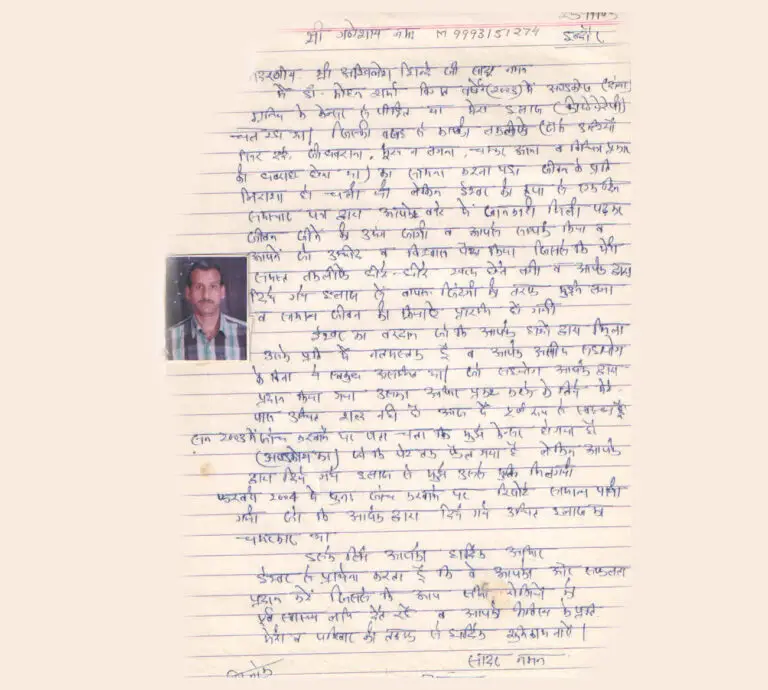
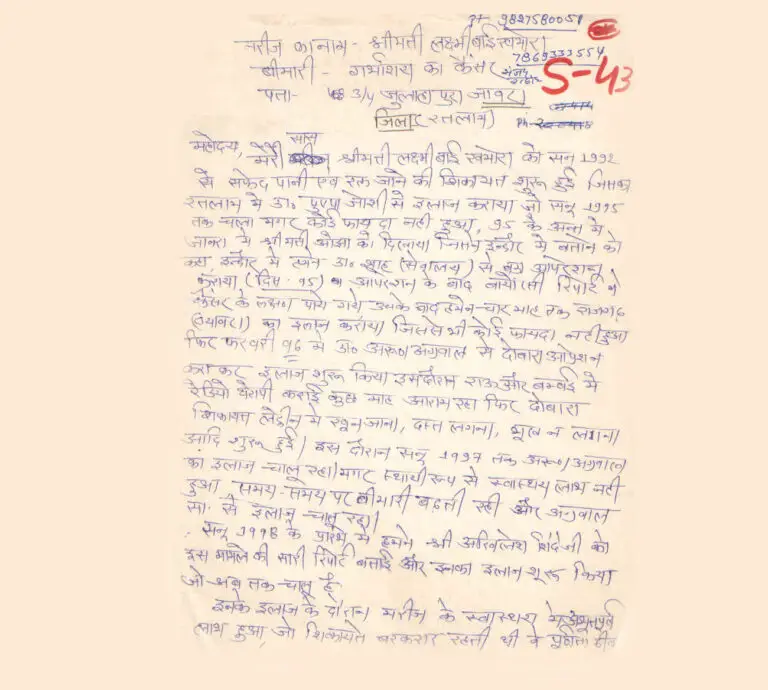
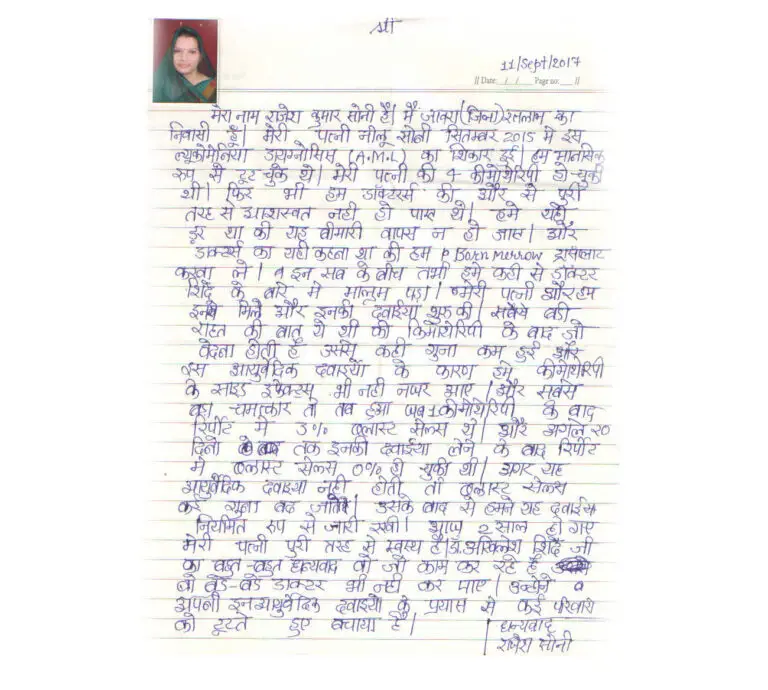
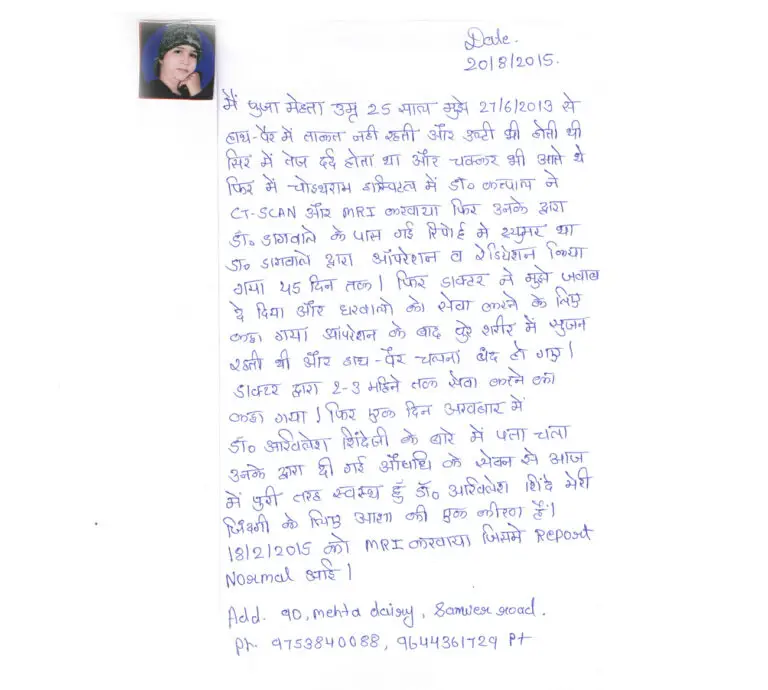
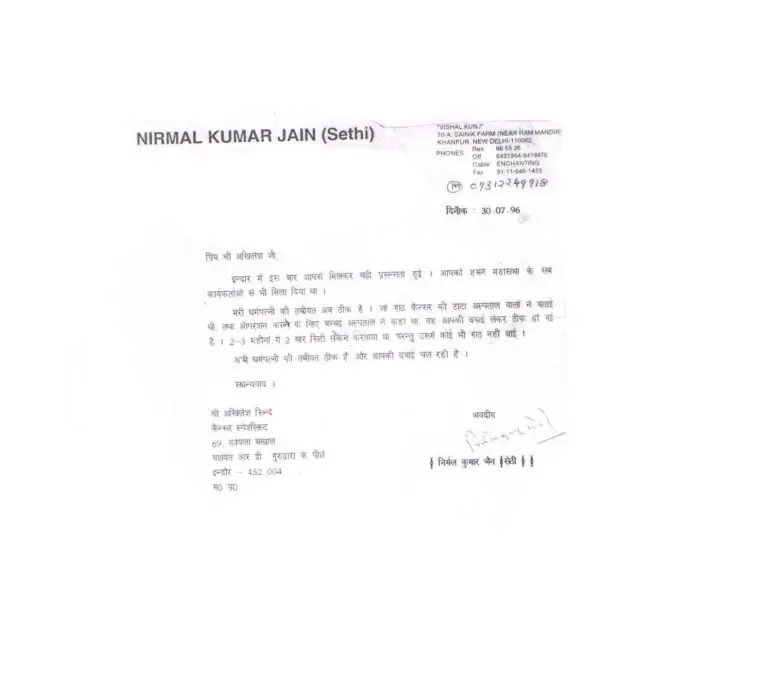
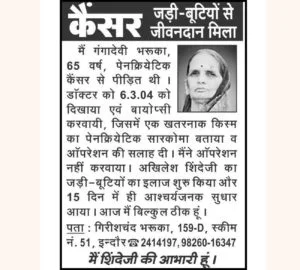
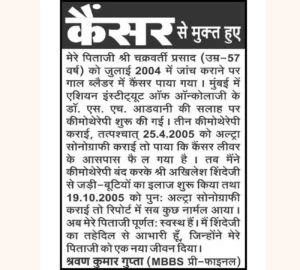
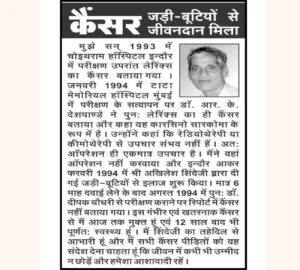
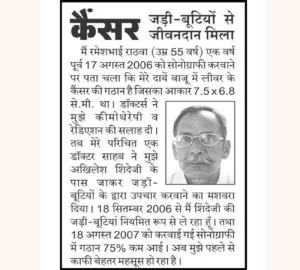
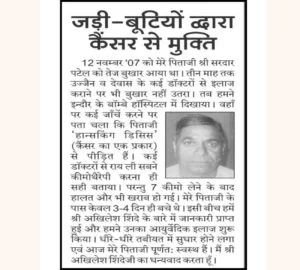
Patient Success Stories
How Ayurveda Understands Lung Cancer
Ayurveda locates the lungs within pranavaha srotas — the channels of vital breath — governed by prana vata and supported by avalambaka kapha. Lung cancer, in our clinical framing, usually presents as a vata–kapha disturbance with accumulated ama (toxicity) in the respiratory channels: decades of smoke, polluted air or occupational dust create the terrain in which arbuda (malignant growth) takes root. This explains our two-track approach — treat the person's breathing, energy and digestion daily, while supporting the body's deeper channels with rasayana herbs. The biopsy and staging from your hospital define the disease; pulse, tongue, breath pattern, cough character and appetite define what your Ayurvedic prescription must do this month.
Stage-by-Stage Supportive Care
Early stage, around surgery: pre-surgical breathing-capacity work and strength building; post-lobectomy support for wound healing, residual lung function and the exhaustion that follows chest surgery. During chemotherapy, immunotherapy or targeted therapy: nausea, fatigue and count support through platinum-based chemo; skin-rash and gut comfort during EGFR/ALK targeted tablets; energy and appetite steadiness through immunotherapy courses. During radiation: soothing support for radiation-induced cough and esophageal irritation that makes swallowing painful mid-course. Advanced and stage IV: breathlessness comfort, cough and mucus control, appetite and weight protection, sleep, and steady morale — quality-of-life medicine in the fullest sense, alongside whatever ongoing therapy your oncologist runs. After treatment: long-term respiratory rasayana and firm, supported smoking cessation if it has not already happened — without it, every other effort leaks.
Herbs and Classical Formulations We Commonly Use
Lung-support prescriptions at our clinic frequently draw on: Pippali (Piper longum) — the classical respiratory rasayana, traditionally given in graded protocols for chronic lung conditions; Vasaka (Adhatoda vasica) — the foremost cough-and-mucus herb of Ayurveda; Tulsi (Ocimum sanctum) — respiratory comfort and immune support; Yashtimadhu (Glycyrrhiza glabra) — throat and airway soothing, dosed carefully where blood pressure is a concern; Ashwagandha (Withania somnifera) — strength and treatment fatigue; Guduchi (Tinospora cordifolia) — immunity and count recovery; and classical formulations such as Sitopaladi and Talisadi churna for daily breathing comfort. Selection, dose and carrier are individualised; everything is disclosed to your oncology team on request.
Managing Treatment Side Effects, Breathlessness and Cough
The daily misery of lung cancer is usually breath, cough and exhaustion — so that is where our protocols live. Breathlessness: positioning guidance, paced-activity rules, gentle pranayama variants chosen for safety (never breath-holding practices in compromised lungs), and warming, channel-clearing herbs. Persistent cough: wet versus dry cough receive different formulations; night cough gets its own timing. Chemotherapy weeks: anti-nausea scheduling from the day before infusion, mouth care, and Guduchi-based support for white counts. Targeted-therapy skin rash: classical skin-soothing applications and internal pitta-calming herbs. Radiation esophagitis: ghee-based demulcent preparations and a swallow-friendly food list so eating continues through the sore weeks. Every symptom plan is written down for the family — who manages what, at what time, and which changes warrant calling us or the hospital.
Diet for Lung Cancer Patients
Lung-cancer diets at our clinic protect two things: weight and breath. Weight, because involuntary weight loss undermines every treatment — we set calorie-dense but digestible menus: khichdi enriched with ghee, soft paneer preparations, almond-milk options, small frequent meals instead of three large ones that splint the diaphragm. Breath, because heavy, cold, mucus-forming food worsens congestion — so curd at night, ice-cold drinks, deep-fried snacks and excess refined sugar are paused; warm fluids, ginger-tulsi infusions, lightly spiced soups and well-cooked seasonal vegetables take their place. For patients on steroids with rising sugar, we adjust carbohydrates pragmatically. Smokers transitioning to quitting get specific cravings-management foods and herb support — the single highest-value change any lung patient can make.
Questions Families Ask Us About Lung Cancer
My father has stage IV lung cancer and the hospital says options are limited. What can you actually do?
We can usually improve the days: breathlessness comfort, cough control, better appetite and sleep, steadier energy, and honest guidance for the family. That is not a cure, and we will never sell it as one — but families consistently tell us these months matter enormously.
He is on immunotherapy. Do herbs interfere?
We prescribe alongside immunotherapy regularly, with conservative herb selection, timing gaps and full disclosure to the oncologist. Bring the exact drug name to the consultation.
Can a non-smoker get lung cancer? My mother never smoked.
Yes — a significant share of Indian lung-cancer patients, especially women, are never-smokers; indoor smoke, pollution and other factors contribute. Her treatment plan with us follows the same supportive logic.
Is pranayama safe for him?
Selected practices, yes — gentle, guided, never breath-retention in compromised lungs. We teach the safe variants on video and tell you plainly which popular practices to avoid.
Medical note: Ayurvedic care at our clinic is supportive and integrative. It works alongside — never in place of — the surgery, chemotherapy, radiation or targeted therapy your oncologist prescribes. Always keep your treating doctors informed of every medicine you take.
Learn more about our Ayurvedic cancer clinic in India, explore last-stage cancer support, or see all 28+ cancer types we treat.
Warning Signs That Need a Doctor This Week
Lung cancer hides behind ordinary complaints, which is why these signs deserve evaluation rather than another cough syrup: a cough lasting beyond three weeks or changing character in a long-time smoker; blood in sputum, even once and even streaks; breathlessness on activity that previously felt easy; persistent chest, shoulder or back ache without injury; repeated chest infections in the same season; unexplained weight loss or fatigue; and hoarseness lasting weeks. Smokers and ex-smokers over fifty should discuss screening options with a physician — and India's many never-smoker patients, especially women exposed to years of indoor smoke, should take persistent respiratory symptoms equally seriously. A chest X-ray and a doctor's examination cost little; a delayed diagnosis costs everything. Our clinic will always tell a worried caller the same thing first: get the scan, then call us with the report.
Why Lung Cancer Families Across India Choose Our Clinic
Lung cancer brings families to us exhausted — by the diagnosis, the breathlessness, and often by guilt and blame around smoking that helps no one. Our consultations begin by retiring the blame and organising the care: a written symptom-management plan the family can run at home, herb schedules timed to the hospital's chemo, targeted-therapy or immunotherapy calendar, breathing-comfort protocols taught on video, and firm, humane cessation support where smoking continues. Patients consult us from every state — the entire pathway runs on WhatsApp reports, video reviews and couriered medicines — and from abroad through the same system. Four decades of cancer-only practice means we have supported every stage of this disease, and we speak about all of them honestly. The first consultation is free: +91-8889188821.
Getting Started: What to Send Us
To begin, WhatsApp to +91-8889188821: the biopsy report and staging summary, any mutation-test results (EGFR/ALK if tested), the current treatment plan or drug names, oxygen use if any, and a plain description of the daily reality — breathlessness on how much exertion, cough character, appetite, sleep, weight trend. The first video consultation is free; medicines arrive by courier with a written symptom-management plan for the family, and follow-ups adapt to each cycle and scan. Patients run this entire pathway from every state of India and abroad.
Our Integrative Principle, Stated Plainly
Every lung-cancer plan we write follows one rule: the hospital fights the tumour, we defend the breathing, eating, sleeping human being around it. We never advise refusing or delaying oncology treatment, we time every herb around the hospital's calendar, and we disclose our prescriptions to your oncologist on request. Our success metrics are honest ones — chemo and immunotherapy courses completed, breathless episodes reduced, weight held, nights slept — and on those metrics, four decades of cancer-only practice have taught us exactly where classical medicine earns its place at the lung patient's bedside.
Frequently Asked Questions
Should the family stop cooking with smoke-producing chulhas around him?
Yes, wherever possible — biomass smoke is hard on healthy lungs and harder on treated ones. Practical steps we coach: cook when the patient is in another room or outdoors, improve kitchen ventilation, shift to gas where feasible, and keep incense, mosquito coils and indoor smoking entirely away from his living space. Small air-quality changes at home compound into noticeably easier breathing weeks, and they cost almost nothing compared to what they protect.
The oxygen machine frightens my mother — she thinks it means the end. What do we tell her?
Tell her the truth: oxygen is a comfort tool, not a verdict — like spectacles for the lungs. Many patients use it for months while eating, talking and enjoying family life. We coach households on relaxed oxygen routines, positioning and paced activity so the machine becomes background, not centre stage, and her energy goes to living rather than fearing.
Understanding Lung Cancer: Causes and Risk Factors
Lung Cancer develops when cells in the affected tissue begin to divide abnormally and escape the body's normal growth controls. While the exact trigger varies by individual, recognised risk factors include genetic predisposition (family history), tobacco and alcohol use, chronic inflammation or infection, environmental and occupational exposures, and — for several cancer types — dietary patterns common in parts of India. Understanding your specific risk profile helps both your oncology team and our Ayurvedic team personalise care: a patient with a strong family history receives different long-term monitoring guidance than one with a primarily lifestyle-linked presentation. lung cancer causes the highest cancer mortality in India with approximately 84,419 new cases annually (ICMR NCDIR 2022), strongly linked to tobacco use. This is not meant to alarm you — it is context that helps explain why your doctor ordered specific tests and why our supportive recommendations are tailored, not generic.
Lung Cancer Diagnosis: What the Tests Mean
A confirmed lung cancer diagnosis typically involves several steps: initial imaging (ultrasound, CT, MRI or PET scan depending on the suspected site), a biopsy to confirm malignancy at the cellular level, and staging investigations to determine how far the disease has spread. Your pathology report will include details such as tumour grade (how abnormal the cells look under the microscope) and, for several cancers, molecular or receptor markers that guide treatment selection. We frequently help patients understand these reports in plain language during consultation — not to second-guess your oncologist, but so you can ask informed questions and feel less overwhelmed by medical terminology at an already difficult time. Bring your full pathology report, including receptor or marker status where applicable, to your first consultation with us.
Ayurvedic Perspective on Lung Cancer
In classical Ayurvedic texts, conditions resembling lung cancer are discussed under the broader frameworks of Arbuda (deep, persistent tissue growth) and, depending on presentation, Granthi (encapsulated swelling). Our clinical assessment of lung cancer generally identifies a kapha-vata dominant in the pranavaha srotas (respiratory channels), with rakta (blood) involvement in advanced disease. This Ayurvedic framing does not replace your modern diagnosis — it sits alongside it, helping us understand which supportive therapies, herbs and dietary adjustments are likely to suit your specific constitution (Prakriti) and the doshic pattern of your particular presentation. Two patients with what is medically the identical lung cancer diagnosis and stage may receive meaningfully different Ayurvedic support plans, because their digestion, tissue strength, sleep quality and overall vitality differ.
Standard Medical Treatment for Lung Cancer
The accepted, evidence-based approach to lung cancer — and the treatment your oncology team will discuss with you — typically includes surgery, chemotherapy (cisplatin or carboplatin combinations), radiation therapy, immunotherapy (checkpoint inhibitors for PD-L1 positive disease), targeted therapy for EGFR/ALK mutations. We want to be completely clear about this: these standard treatments are the proven, primary approach to lung cancer, and nothing on this page or anywhere on our website should be read as a substitute for them. Our role, consistently stated across four decades of practice, is to support your body through these treatments — improving your tolerance of side effects, protecting your nutritional status, and helping you complete your prescribed treatment course with better quality of life. Patients who ask us "should I skip chemotherapy and just do Ayurveda" receive the same honest answer every time: no. Combine both, coordinated, and you give yourself the best outcome.
Recognising Lung Cancer Symptoms Early
Early detection meaningfully improves outcomes across virtually all cancer types, including lung cancer. Symptoms that warrant prompt medical evaluation include persistent cough lasting more than three weeks, coughing up blood, chest pain that worsens with breathing, hoarseness, unexplained weight loss, recurring chest infections. cough lasting over three weeks, blood in sputum, unexplained breathlessness, chest pain on breathing or coughing, recurring pneumonia in the same lung area. If you are experiencing any combination of these signs, please see a qualified doctor for proper diagnostic evaluation before exploring any supportive or complementary approach — a delayed diagnosis is the single biggest controllable risk factor in cancer outcomes, and no herbal formulation is worth that delay.
Managing Treatment Side Effects of Lung Cancer Therapy
Lung Cancer treatment, while necessary and effective, comes with predictable side effects that our protocols are specifically designed to ease: chemotherapy-induced nausea and fatigue, radiation pneumonitis and esophagitis, immunotherapy-related inflammatory reactions, breathlessness, appetite loss. We anticipate these rather than wait for them to appear — for example, anti-nausea herbal protocols often begin before a chemotherapy infusion rather than after symptoms start, and mouth-care routines begin in week one of radiation rather than once ulcers have already formed. None of this changes or delays your treatment schedule; it runs alongside it, coordinated with your treating oncologist who remains informed of every formulation we prescribe.
Lung Cancer Diet and Nutrition Guidance
Nutrition plays a measurable role in how well patients tolerate lung cancer treatment and how quickly they recover between cycles. Our general guidance includes warm, easily digestible foods, steam inhalation with ajwain and tulsi, avoiding cold and heavy foods that increase kapha, adequate protein for tissue repair, small frequent meals if breathlessness limits appetite. We avoid rigid, one-size-fits-all diet sheets — what works for a patient mid-chemotherapy with significant nausea differs from what suits the same patient six months into recovery. At consultation, we build a practical, kitchen-level diet plan around your current treatment phase, appetite, and any specific restrictions your oncology or surgical team has given you (such as low-sodium guidance for fluid retention, or low-fibre guidance immediately post-bowel-surgery).
Herbal Support Commonly Used for Lung Cancer
While every prescription is individualised after assessment, lung cancer supportive care at our clinic frequently draws on Vasaka (Adhatoda vasica) for respiratory clearing, Tulsi (holy basil) for immune and respiratory support, Yashtimadhu (licorice) for cough and throat soothing, Pippali for breath capacity, Ashwagandha for strength and fatigue, Guduchi for immunity. These are not sold as standalone over-the-counter products from our clinic — they are prepared as part of a personalised formulation, with dose, carrier substance (anupana) and timing adjusted to your treatment phase, current medications, and constitution. We disclose every formulation to your oncologist on request, and we actively check for any known interactions with your prescribed chemotherapy, targeted therapy or hormone therapy before recommending anything.
Lung Cancer Recovery and Long-Term Wellness
The period after active lung cancer treatment concludes — whether that means surgical recovery, completion of a chemotherapy course, or transition to maintenance therapy — is where much of our longest-term work happens. Typically this involves twelve to twenty-four months of structured Rasayana (rejuvenation) protocols aimed at rebuilding strength, supporting immune function, and addressing any lingering treatment-related symptoms such as fatigue, neuropathy or digestive changes. We coordinate spaced follow-up consultations during this period, generally aligned with your oncology team's own follow-up and surveillance schedule, so that your recovery is monitored from both perspectives simultaneously.
Frequently Searched Questions About Lung Cancer Treatment in India
What is the survival rate for lung cancer in India?
Survival rates for lung cancer vary significantly by stage at diagnosis, specific subtype, and access to timely treatment — figures published by international registries do not always reflect outcomes in every Indian treatment setting. Rather than focusing on population-level statistics, we encourage patients to have a direct, specific conversation with their oncologist about their individual prognosis based on their exact diagnosis, stage and treatment response, since this is far more meaningful than any general percentage.
Can lung cancer be treated without chemotherapy?
This depends entirely on the cancer type, stage and individual case — some early-stage cancers are treated with surgery alone, while others genuinely require chemotherapy, radiation or a combination as the evidence-based standard of care. This decision belongs to your oncology team based on your specific pathology and staging, not to us, and we will never suggest avoiding indicated chemotherapy in favour of herbal treatment alone.
How much does Ayurvedic support for lung cancer cost at your clinic?
Consultation with Dr. Shinde's team has never carried a consultation fee since the clinic's founding in 1986 — you pay only a modest amount for the herbal medicines themselves, which varies based on your specific formulation and treatment duration. We discuss exact costs transparently during your first free consultation, with no obligation to continue if the approach isn't right for you.
Is it safe to start Ayurvedic treatment for lung cancer immediately after diagnosis?
Yes, and in fact earlier is generally better — starting supportive care from the time of diagnosis, even before your first chemotherapy cycle or surgery date, allows us to help build baseline strength, address anxiety and sleep disruption, and prepare your digestive system for the demands ahead. Many of our most successful long-term patients began consultation in the days immediately following their lung cancer diagnosis.
Yes. Ayurvedic treatment can be used as complementary therapy alongside chemotherapy and radiation to help reduce side effects and improve immunity. Always consult your oncologist before combining treatments.
Yes! Dr. Shinde does not charge any fee for consultancy and only charges a very nominal amount for medicines. First consultation is absolutely FREE.
Absolutely. We provide online consultations via WhatsApp and phone for patients across India and internationally. Share your medical reports at +91-8889188821.
Treatment duration varies based on stage of cancer, individual response, and goals. Ayurvedic care is usually long-term, focusing on sustained improvement and quality of life.
Ayurvedic treatment for Lung Cancer at Dr. Shinde's clinic involves personalized herbal formulations, Panchakarma detoxification, dietary therapy and immunity-boosting protocols designed for each patient's unique Prakriti (body constitution).